Friday, August 9, 2019

Semana 1.


Alejandro Valencia Rodriguez

El día comenzó bastante temprano, para ser más exactos a las 4:30 am. Todo iba marchando de acuerdo a lo esperado, de hecho marcho mejor de lo que esperaba. Por qué al momento de salir de mi casa hacia el transmilenio, me cruce con mi mamá. La cual estaba yendo a su trabajo, que esta bastante cerca a la sede del norte de la universidad. Me dejo en el portal norte lugar donde me encontraría con mi amiga, Lorena. Ella me recogió alrededor de las 6:30 am, y nos dispusimos a llegar a la clase. En el transcurso hacia la universidad nos pasó la pirmiparada de pensar que él tráfico sería igual al de la semana pasada, con poco tiempo de haber salido del portal nos dimos cuenta lo errados que estábamos. La cantidad de carros y buces aumento de sobremanera,  y en ese momento empezó nuestra “faena” universitaria del día viernes.

Después de pasar unos buenos minutos, que a mi parecer fueron más de los que necesitábamos para llegar a tiempo a la clase, llegamos a el parqueadero de la universidad. El panorama se veía bastante inhóspito, había algunos carros parqueados y un par de buses con estudiantes,  lo cual nos fue de gran ayuda para poder escoger un lugar donde estacionar el carro. Debido al afán que teníamos por llegar a tiempo. Lorena decidió escoger el primer puesto de parqueo que encontró, parquear con ese mismo impulso, y  al momento de apagar al carro decir una frase que me quedo resonando  por un buen tiempo, decía algo así como: “Me encanta que cuando tengo afán nunca puedo parquear bien, pero si tuviera todo el día parquearía excelentemente, igual ya que, tengo afán”. Mientras comentábamos un poco acerca de lo que dijo ella, nos dimos cuenta que en realidad nos rindió bastante llegando hasta ahí, por lo que debíamos calmarnos y dirigimos hacia el salón que nos correspondía. Ambos sacamos nuestro celular, abrimos el “SIAR”, miramos que todos los datos de la clase fueran los mismos, lo cual es bastante ridículo ya que tanto ella como yo metimos horario al mismo tiempo y nos aseguramos de estar en los mismos grupos. Pero como buenos primiparos dudamos hasta de lo que escogimos nosotros mismos. Pasada la angustia innecesaria, nos dirigimos a buscar nuestro salón el cual encontramos con bastante facilidad, pero aun así dudamos de si entrar o no por miedo a que por arte de magia lo hubieran cambiado y fuera otra clase, como de calculo avanzado o algo así.

Finalmente decidimos confiar, y entramos. El salón estaba bastante lleno, con gente un poco más joven que nosotros como era de esperar. En la esquina estaba el profesor cuyo nombre no recordábamos, aunque hace menos de cinco minutos lo habíamos  visto y comparado para probar que sí estábamos en la misma clase. Enseguida nos pusimos a buscar un lugar donde sentarnos, vi uno al lado izquierdo en la segunda fila de dos puestos, y se lo señale a ver si le parecía bien. Efectivamente estuvo de acuerdo con mi decisión y nos sentamos en el lugar que le indique. Tuvimos que esperar alrededor de cinco minutos sentados, y comenzó la clase. 

Como había sucedido en la mayoría de las clases, el profesor comenzó por presentarse, presentar la clase, los objetivos, exámenes y todos los pormenores que eso conlleva. Luego procedió a darnos la bienvenida a la universidad, a que nos presentáramos ante la clase, con nuestros nombres, edad y carrera. Llego mi momento de  presentarme y como era de esperarse la mayoría  de las personas se asombraron al oír tanto mi respuesta, como la de mi amiga Lorena. Al parecer en la mayoría de las clases no se habían enterado que la Universidad tenia una nueva facultad de creación y un nuevo pre-grado en Teatro Musical. Generado por un convenio con Misi; la mejor compañía y academia de Colombia en este arte. Pero creo yo que el hecho de ser una carrera artística  y estar en la facultad de administración y emprendimiento, es lo que más curiosidad generaba en la gente.

 Después de terminar esta actividad, él profesor Juan Sebastian hizo una actividad lúdica y bastante divertida. Nos hizo dibujar un objeto  que nos representara en una hoja, después las recogía, sé las entregaba a otra persona ,y esta describía como creía que era la personalidad del dibujante.Yo dibuje una balanza, por que considero que la vida debe tener un balance en todo sentido para poder vivirla al cien. Tanto  a nivel profesional, como personal, intelectual,  y espiritual. Por esto mismo me gusta mucho este objeto, me recuerda que debo buscar un constante balance general. También por que considero que cualquier “ideologia o pensamiento”de este mundo llevado a un extremo, es peligroso para la estabilidad de una persona. Enseguida terminábamos de describir a la persona, lo volvíamos a entregar y Juan Sebastian usando Grafología describía , tanto a la persona que dibujo como la que escribió. Mientras   él iba describiendo uno iba diciendo   un dato más acerca de cada uno. Al terminar esta actividad, quedaba muy poco tiempo para acabar la clase, por lo que el profesor nos habló de esta tarea que estoy escribiendo en el momento y otra de un video de alfabetización el cual debíamos ver y responder las preguntas en caso de no cumplir con las mil doscientas palabras que debemos tener en este escrito. Así que a continuación responderé las preguntas del video.

Video Alfabetización escolar.


  1. ¿Qué es el carácter propédeutico?

El caracter Propédeutico según lo describen en el video es una de las maneras, en las que se enseñan la lectura y escrituras. Donde un grupo de especialistas en estas dos áreas, y por medio de ejercicios, enseñan como se debe desarrollar el alumno para lograr comprender y desarrollarse en su carrera, sin tener que involucrarse en alguna área en especifico de esta misma si no simplemente en leer y escribir.


2. Cómo se podría relacionar el video con la clase de Análisis de Textos.

Yo considero que la relación entre la clase y el video es más que clara, lo que se busca en una clase como esta es: por medio de lectura lograr comprender y analizar el contenido importante de diferentes textos. También que a partir de ese análisis se pueda llegar a formular nuevas conclusiones y poder escribir un texto con las mismas características desde el punto de vista e. Investigación de cada alumno. Dicho esto considero qué es muy importante que la metodología que se explica en le video sea la usada en clase. Para poder comprender y analizar textos y después argumentos, que enseñen más allá de cómo llevar acabo dichos ejercicios, si no de ejecutarlos con excelencia en diferentes áreas de la misma carrera.

3. Cuál es la postura de  Paula Carlino frente a la alfabetización académica.

La postura de Paula Carlino es la opuesta a la de carácter propédeutico. Es decir para ella es necesario que tanto los especialistas de escritura y lectura se involucren directamente  en loas diferentes materias que se vean en el   curso. Ya sea por medio de una clase de acompañamiento entre el especialista y profesor de la asignatura, o que el mismo profesor se encargue de involucrar ejercicios en su materia. E inclusive que los maestros los cuales tengan  la materia de lecto-escritura sepan orientar sus objetivos  académicos  para una compresión de su área en todas las materias y no solo en la suya.
4.  Mencione 10 ideas del video
  • El primer debate que ocurrió constaba de si las universidades debían seguir educando en lectura y escritura a sus alumnos.
  • Reconocer el gran debate qué tiene, la enseñanza de alfabetización.
  • Comprender el pasado de este debate y cómo ha cambiado.
  • Entender que como cambio, debe seguir cambiando para mejorar la calidad educativa.
  • Los dos tipos de enseñanza de la alfabetización que existen.
  • Comprender que él que tiene las carácter Propdeutico, no es necesariamente el mejor.
  • Comprender las características del segundo lineamiento pedagógico.
  • Demostrar que al cambiar el método de enseñanza se logran objetivos más claros, con respecto a la gente que estudia cierta carrera en especifico.
  • Que existen diferentes maneras de hacer el cambio pedagogico, en todo grado de educación.
  • Existen lugares donde estos cambios ya se han hecho y el cambio positivo que eso. Ha generado. Debería implementarse más.


Wednesday, May 22, 2013

Dubai Police Added Another Supercar To Their Fleet.

 
The Dubai police force has added yet another incredible supercar to its fleet and this time it’s a Bugatti Veyron. Now the bad guys there will have to outrun the fastest production vehicle in the world, so unless they’re driving the same car, they are out of luck.
 
 The Bugatti Veyron joins an already impressive fleet of vehicles that the Dubai police department has decked out in their signature green and white paint job. They’ve got a Lamborghini Aventador, an Aston Martin One-77, and a Ferrari FF in the fleet already so the Bugatti should feel right at home parked with such elite company.
 
The rest of the cars, however, might feel a little inferior since the Bugatti packs some serious punch. As the most powerful car in the their fleet, the Bugatti Veyron will hunt down criminals with a quad turbo, 16-cylinder engine that produces more than 1,000 horsepower. Just thinking about being chased by that thing should be enough to make you throw your hands in the air and give up.
 
Major General Khamis Mattar Al Mazeina has said in the past that these cars won’t necessarily be burning up the roadways in Dubai, but will be used more to police tourist areas and enhance the country’s upscale reputation. That means you might catch a glimpse of it if you happen to be at the Burj Khalifa, the world’s tallest building.
 
Still, it’s hard to imagine that not one of the cops assigned to drive a supercar has taken it out on the highway, just to be sure everything is working properly.
 
 I also can’t help but wonder how they decide who gets to drive it every day. “Bob, you get that sedan. Mike, I like you better, here are the keys to the Bugatti.” I’d think it’d bring office politics to a whole new level of crazy.

From: http://www.tflcar.com/2013/05/dubai-police-add-bugatti-veyron-to-their-fleet/

Monday, May 20, 2013

2014 BMW 2-series M Sport / M235i Spy Photos

2014 BMW 2-series M Sport / M235i Spy Photos


What It Is: New spy shots of the BMW 2-series, which will replace the 1-series coupe and convertible, caught completely uncovered. The 2-series lineup eventually will include both body styles, and they will look less like the current rear-drive 1-series hatchback than ever before, with a unique front-end treatment. The design scheme allows BMW to place its entry-level cars into the hierarchy followed by the 5-series–based 6-series and the upcoming 3-series–based 4-series. Generally speaking (the 6-series Gran Coupe being an anomaly), sedans, wagons, and hatches will wear odd numbers, and coupes and convertibles will wear even numbers.
No piece of sheetmetal carries over from the current 1-series coupe, but the 2-series doesn’t deviate far from its formula. It continues to be a compact, three-box two-door with rear-wheel drive and the option of powerful engines. The interior is virtually identical to that of the second-generation 1-series hatchback now being peddled outside the U.S. Only the hood for the instrument panel is different from the earlier form, being more rounded. Our photos show the M235i with the M Sport package, including unique interior trim, aggressive wheels, and meaner exterior detailing. Even though we were previously denied a version of the M135i, we’ve heard that the M235i will have a spot in BMW’s U.S.-market 2-series lineup. Base models will likely be badged 228i and come with four-cylinder power, with the M235i being the sole non-M six-cylinder 2er—there will be no regular-grade 235i.
Why It Matters: The BMW 2-series will have the same marching orders as those of the 1-series coupe and convertible: to introduce new buyers to the brand. A more-efficient base engine will help. The top-dog 2-series will be the rip-snorting M2, but the car’s classic proportions, neat dimensions, and ostensibly sporty dynamics should entice enthusiasts even in sub-M form.
Platform: Like the previous and current 1-series, this car is derived from BMW’s compact rear-wheel-drive platform. All-wheel drive is a distinct possibility—it’s offered on the Euro 1-series—and if BMW’s U.S. diesel expansion plans prove successful, the company could offer us a diesel 2, as well. It’s worth noting that the 1-series nameplate eventually will migrate to a front-wheel-drive model riding on the same architecture as the next-generation Mini Cooper.
Powertrains: Engine choices for the U.S. market will be a 240-hp, 2.0-liter turbocharged four in the 228i, along with the N55 3.0-liter turbocharged straight-six tuned to 320 horsepower in the M235i. Happily, there will be a follow-up to the awesome 1-series M coupe, and that car—the M2—will have 360 or more horsepower. It will directly target the Mercedes-Benz CLA45 AMG and the upcoming Audi RS3, and we definitely want it to come here. Six-speed sticks should be standard across the board; the regular-strength cars will offer a ZF-sourced eight-speed automatic. The M2 could be fitted with an optional seven-speed dual-clutch transmission.
Competition: Acura ILX, Audi A3/S3, Mercedes-Benz CLA-class, Volkswagen GTI/Golf R.
Estimated Arrival and Price: The sheets could be pulled from the 2014 BMW 2-series as early as the end of this year, and the car is expected to roll into dealerships a few months later. Pricing should begin in the low-$30,000 range for the 228i. View Photo Gallery
taken from:

Tuesday, May 14, 2013

Mitsubishi subcompact hinted for US


Mitsubishi subcompact


Desperate for new models to bolster their limited lineup, Mitsubishi dealers recently got a glimmer of hope with news that an entry-level sedan may arrive stateside in 2015.
The dealers were shown a rendering of the subcompact at the brand's regional dealer meetings held during the first two weeks of April, according to attendees and Mitsubishi Motors North America. The company told dealers it is targeting a 2015 release for the vehicle, attendees said.
Mitsubishi declined to confirm the release timing or whether U.S. dealers would get the car but acknowledged that the plans were discussed with dealers.
The company "is looking into introducing a small, entry-level sedan to the United States market, and while we continue to study the market trend and demand for this smaller-segment sedan, we have not come to a concrete decision on when this model may make the U.S. showroom," a Mitsubishi spokesman said in a statement.
The sedan could be based on the Mitsubishi G4 concept sedan that debuted at the Bangkok auto show in March. Mitsubishi said at the time that it planned to introduce a production version of the sedan for sale globally. The concept featured a lightweight steel body and a 1.2-liter, three-cylinder engine mated to a continuously variable transmission.
Scott Grove, owner of two Mitsubishi dealerships near Chicago and former chairman of the brand's national dealer council, said the news was a high point in a meeting that was markedly more positive than others in recent years. Grove said he saw the sedan's teasing as the latest sign of a recovery for Mitsubishi, which will launch the redesigned Outlander crossover this summer, followed by the new Mirage small car later this year and a plug-in hybrid Outlander next year.
"They basically said that this is a logical progression for our expansion," Grove said. "I believe we're on offense."
(Mitsubishi hints at subcompact for U.S. originally appeared on Automotive News, sub. req.)
By: Ryan Beene, Automotive News on 5/13/2013

taken from:

http://www.autoweek.com/article/20130513/CARNEWS/130519930

BMW i8 Concept

Last week I posted some examples of excellent concept cars that brands like Audi or Mercedes released recently. In my opinion, the BMW i8 has one of the most impressive designs and the most advanced technology of the 4 prototypes shown. This concept was released during the 2009 Frankfurt Motor Show and a year later it was announced that it would be produced massively starting in 2013. This is one of those strange cases in which concept cars don't stay as a concept but actually make it to the market. This happened also to the Mazda Takeri Concept that suffered some minor changes in the exterior to be commercialized as the new Mazda 6 Takeri.  Now, I would like to share a short video that shows the internal and external features, as well as the main characteristics of this plug-in hybrid vehicle:


Monday, May 13, 2013

The Car With Autopilot Is On Its Way.

Tesla Motors CEO Elon Musk is seriously investigating technology that could lead to driverless cars and he’s in talks with Google to make it a reality. It’s not as far-fetched as you might think, given the technology in cars on the road right now that monitors what’s happening and can actually stop the car to prevent an accident.
 
Musk said that the technology they’re looking at isn’t something that’s going to let the driver slide over to the passenger side and eat breakfast while the car drives to work. Instead, it’ll be more like the autopilot on a plane with the driver staying put and keeping watch over their vehicle.

This is a bit different than what Google has been working on as a part of their driverless-car efforts. The Light Detection and and Ranging (Lidar) system would do more than act as an autopilot, but it’s still trying to overcome technical obstacles and is extremely expensive.
 
A camera-based system which would be much less expensive and easier to integrate into vehicles has more possibility in Musk’s eyes. It’s the kind of thing that’s already in some cars to a lesser degree with rear and front cameras that detect the distance between a vehicle and other objects and warn the driver of potential problems.
 
Google also sees the driverless option happening a lot early than most auto manufacturers. They expect it to be market ready within a short five years where companies like Tesla and Nissan don’t expect to see autonomous cars in showrooms for at least a decade. To Google’s credit, they have showed off an autonomous Toyota Prius fleet with roof mounted laser-radar devices.
 
Elon Musk; Tesla's CEO

Despite the conflicting estimates about a ready date, the combination of interest from auto manufacturers along with the technological development happening at companies like Google all but assure an autonomous option in the near future.


Monday, May 6, 2013

Concept Cars

Concept cars are a very important part of the vehicle world. They are the way that all car brands show their most impressive designs and most modern technologies based in a futuristic style. This cars are most likely to stay as a concept and never make it to the market because of their expensive manufacturing. Here are a few pictures I´d like to share of excellent concept cars presented recently by some brands in several auto-shows around the world: 

BMW i8 Concept 
Mercedes Benz Biome Concept

GT by Citroen Concept
Audi A9 Concept


La Marquise


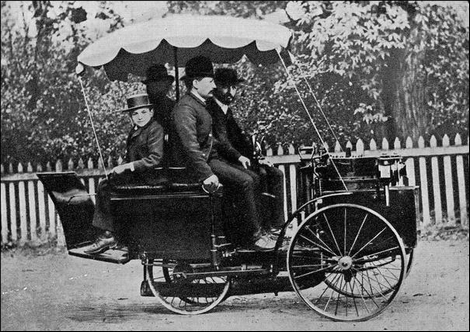
La Marquise, is, as of October 2011,thought to be the world's oldest running automobile. It is an 1884 model made by De Dion, Bouton & Trépardoux of France. The car was built as a prototype for future quadricycles, and named for the mother of Albert, the Count of Dion.

In 1887, the Count of Dion drove La Marquise in an exhibition that has sometimes been called the world’s first car race, though his was the only car that showed up. It made the 20-odd-mile Paris-to-Versailles round trip at an average speed of almost 16 miles per hour (26 km/h). The following year, he beat Bouton in a three-wheeler with an average speed of 18 miles per hour (29 km/h).

Fueled by coal, wood and bits of paper, the car takes 30–40 minutes to build up enough steam to drive. Top speed is 38 miles per hour (61 km/h).

As the oldest car, it wore the number "0" in the 1996 London to Brighton Veteran Car Run. The vehicle was sold at the 2007 Pebble Beach Concours d'Elegance for $3.52 million. It sold again in 2011 for $4.6 million, a record price for an early automobile.

Microsoft increases stake in auto industry


Having reshaped a big piece of the world's economy around its Windows software, Microsoft Corp. now wants to do the same thing in the car business.
What the Seattle giant sees there says as much about the future of cars as it does about itself.
"The part we want to play in the future," says Pranish Kumar, group program manager for the Seattle-area software giant's Windows Embedded Automotive business, "is creating a unifying experience -- bringing together all the features and technologies into one common platform. But it will also provide a platform that can be easily upgraded and improved as time passes."
Microsoft is part of a wave of computer industry titans -- with Apple, BlackBerry, Google and others -- competing to play a more critical role in cars. The prize, as they see it, is the expanding and highly profitable part of the car that is evolving as an operating system.
Today that business is largely confined to vehicle infotainment systems, which allow drivers to speak by phone, hear traffic conditions, receive e-mails and find restaurants. But in Microsoft's vision of the future, vehicle intelligence will get more sophisticated.
As smartphones, information apps and other consumer devices perform more ambitious functions, software providers will take a bigger role in vehicle development. And when that happens, software companies will begin to influence other component decisions, including steering, seating and interior cabin functions.
Software companies see another potential line of automotive business. When cars have a single, unified operating system somebody will have the opportunity to regularly update the vehicle systems -- ideally for a fee -- in the same way that computer industry firms now update phone apps and software programs.
Cash-rich player
Microsoft wants to pull the auto industry in this direction. And with revenues of $74 billion and net profits of $17 billion for the fiscal year ended last June 30, Microsoft is a cash-rich force to be reckoned with.
It has been promoting Windows to automakers for a decade now. Ford Motor Co., Fiat Group and Kia Motors Co. rely on Microsoft platforms to coordinate functions such as radio and music storage, e-mail delivery, navigation and personal schedule updating.
Microsoft helped to develop Ford's popular Sync hands-free communications system, which is spreading across Ford's portfolio, as well as Fiat's Blue & Me system.
But Microsoft's automotive engineers and designers say that they are just warming up, and that their future product offerings will help cars move into a new era of smart technology.
The company was expected Monday to launch an online video marketing campaign directed at automakers promoting the idea of "the intelligent car" -- and Microsoft's preparedness to deliver it.
Last fall, CEO Steve Ballmer said that in addition to being a software company, he now wanted Microsoft to become known as a maker of "devices."
"We've been in the automotive arena for a while already," Kumar said. "But we think we can take it a lot further."
That might include working with third-party manufacturers to produce intelligence and detection components, he says -- such as vehicle optics, voice recognition devices and head-up display units. More than likely, Microsoft will never produce windshield wipers, he says. But it might move the wiper controls into a common Microsoft touch screen configuration that they share with headlights and temperature controls.
Plenty of competition
Microsoft is not alone in its vision of an expanded role for software suppliers. QNX Software Systems Ltd., a subsidiary of BlackBerry, sees the same industry trajectory, with automakers turning to software suppliers to unify and coordinate various vehicle controls. Although QNX has little name recognition, it already has global contracts with the likes of General Motors, BMW, Audi and Volkswagen.
Google Inc., through its Android operating system, is hot to expand its role in vehicle technology. Google is now committing r&d resources to driverless car technology. And offstage, one of the fiercest competitors in the computer world, Apple Inc., is emitting signals that it, too, wants to get into the car business. The normally secretive innovator has said barely a word -- except to let slip a phrase in public comments that has auto industry software merchants buzzing: "iCar."
No one knows exactly what Apple meant. And Apple isn't amplifying. But the company is known primarily as a product maker rather than a software supplier -- iPhones, Siri, iPads, Mac laptops. GM just began integrating Siri into the 2013 Chevrolet Sonic and Spark small cars through the Chevrolet MyLink system. At the other end of the price spectrum, Siri is also going into the $300,000 Ferrari FF supercar, along with Apple iPad Minis built into the backs of the front-seat headrests for rear passenger use.
Speculation is that Apple would never be content supplying operating systems for a car. It would be more in keeping with its corporate history to someday produce entire Apple-brand components for the car, suggests Anna Buettner, who follows the vehicle infotainment sector as an analyst for IHS Automotive. It helps that Apple is respected for dependability, she says.
"The most important issue for having advanced software platforms in cars is that they have to be reliable," Buettner says. "It's one thing for a software glitch to occur in your navigation system. It will be a more serious issue in the future if one occurs in your brakes.
"This is what some automakers are still afraid of: Can these software operating systems be completely reliable?"
Automakers back nonprofit
Buettner predicts that still another significant competitor will rise in the emerging software segment: the GENIVI Alliance. The untested nonprofit consortium plans to offer an open-sourced Linux software platform that can be adapted from brand to brand. But unlike the established giants, GENIVI is backed by a string of automakers -- GM, Peugeot, Renault-Nissan, Hyundai, BMW and others, and more than a dozen global suppliers, including Bosch, Continental, Denso, Aisin and Valeo.
One factor nudging the auto industry closer to the computer giants is that product innovation moves so much faster in cell phones and laptops than it does in autos. Cars are traditionally redesigned every four to eight years, and at enormous expense. Electronics and software routinely change within two years.
Andy Gryc, QNX's senior automotive product marketing manager, says the goal of a unifying software platform is to permit auto companies to upgrade their cars' features without replacing hardware.
"The desire is for automakers to do less and less customizing," Gryc says, referring to designing the components of individual models. "The more you have to do, the more time it takes and the further you are from reaching the market.
"You really don't have to rip out all the plumbing every time you redesign a car."
Lucrative upgrades?
Being able to upgrade a car's features through its software brings up another hot point for the industry: The money to be made performing upgrades will be up for grabs.
This will become increasingly significant as vehicle operating systems flourish. IHS forecasts that by 2018, nearly 25 million infotainment operating system platforms will be sold. Not all will be single unified systems like Microsoft and QNX propose; many cars will carry two or more platforms. IHS estimates that just under 12 million were sold last year.
"When a vehicle owner updates his car today, it's really something that occurs in the aftermarket," Kumar says. "Car companies make all their money when the vehicle is sold the first time -- anything after that is really the province of the dealer."
But in the future, automakers could sell software-based enhancements and new features through the vehicle's life.
"We're looking at something of a revolution," he says. "You can monetize the upgrades, and they will go on through the life of the vehicle."
In the past year alone, Microsoft has delivered four upgrades for Ford's Sync system, including added features. A team of designers at Microsoft's multibuilding suburban Seattle campus steadily turns out new versions of vehicle programs. In the basement garage of the design building, mixed in among employee cars, are a fleet of 30 vehicles wired for testing new ideas.
New products can move from idea to working prototype in just two weeks. Testing can be completed and validated in another week.
"We might make a product change in as little as an hour," Kumar says. "We can run a battery of tests in an afternoon. That's a little hard for automakers to get their head around.
"This technology moves very fast, and we're trying to reassure our customers that this is how it works," Kumar says. "It's a lot of change coming at the auto industry."
By: Lindsay Chappell, Automotive News on 5/06/2013
taken from:


Sunday, May 5, 2013

Race Car for Streets?

 
The all-new 2013 Audi RS 5 almost feels like a race car for the street, with its glued-to-the-road suspension, strong brakes and awesome, high-revving 4.2-liter V-8 that generates 450-horsepower and 317 pound-feet of torque. That naturally aspirated V-8 is good for an oh-my-gosh 0-60 m.p.h time and, says Audi,  an electronically governed top speed of 174 m.p.h. A rear spoiler automatically raises at 75 m.p.h. and retracts at 50 m.p.h.—or can be manually raised and lowered via the push of a button.
 
The exhaust system has two chromed oval-shaped exhaust outlets integrated within the bumper. They emit a performance sound to fit the RS 5’s character and look as if designed by a skilled artist. Audi says the $68,900, all-wheel-drive RS 5 looks like a “classically elegant coupe.” Rather, I think it looks downright slinky. (Audi later says in a press release that the RS 5  styling is “dynamically elegant.”) But the low front end must be kept in mind when pulling into a parking spot with objects such as a high curb at its end.
 
 
Some sports car buffs will gripe that there’s no availability of a manual transmission. Instead, the engine is hooked to a responsive seven-speed, double-clutch  “S tronic” automatic transmission that can operate in responsive fully automatic mode or be manually shifted via the gear selector or shift paddles near the flat-bottom steering wheel. There’s also a launch-control program, which seems silly for this car.
 
The track? Naw. There’s no doubt, though, that the RS 5 has “track-tested performance.” For instance, my test car securely took decreasing radius curves onto freeways so fast that it almost made my ears bleed. Electronic stability control will help keep unskilled drivers safe during hard motoring. It integrates a sport mode and can be switched off entirely. But most should leave it alone because the RS 5 coupe has capabilities far beyond those of most drivers.
 
The car is nicely equipped, with items including a Nappa leather interior, tilting glass-panel sunroof with a retractable sunshade, heated power front seats, decent sound system and push-button start. Safety items include front and side curtain air bags and front/rear acoustic parking sensors. This Audi is too quiet, comfortable and heavy, at a little over 4,000 pounds, to be a race car. The horsepower and weight conspire to result in estimated, mediocre city fuel economy of 16 miles per gallon.
 
From: http://www.tflcar.com/2013/04/review-is-the-new-audi-rs-5-a-race-car-for-the-street/
 

Thursday, May 2, 2013

The Two Seconds Club

3rd place: 2012 Nissan GT-R Premium
                  0 - 60 mph in 2.94 sec.
                  0 - 100 mph in 7.3 sec.
                  1/4 Mile in 11.2 sec. at 123.4 mph.
                  0 - 160 mph in 22.0 sec.
2nd place: 2011 Porsche 911 Turbo S
                  0 - 60 mph in 2.84 sec.
                  0 - 100 mph in 6.7 sec.
                  1/4 Mile in 10.9 sec. at 128.0 mph.
                  0 - 160 mph in 18.7 sec.
1st place: 2012 Bugatti Veyron 16.4 Super Sport
                  0 - 60 mph in 2.52 sec.
                  0 - 100 mph in 4.9 sec.
                  1/4 Mile in 9.9 sec. at 145.8 mph.
                  0 - 160 mph in 12.2 sec.

Undecided? How about Porsche 911 Carrera 4S?

294 kW (400 hp) at 7,400 rpm
0-100 km/h (62 mph) in 4.5 s
Top speed: 299 km/h (185 mph)
Combined: 9.9 l/100 km (28.5 mpg)*
CO2 emissions: 234 g/km*


Monday, April 29, 2013

Five myths about electric cars


The troubles of electric-car-maker Fisker Automotive have fueled another round of debate about whether plug-ins can live up to their promises. The California start-up, which had already halted production and laid off most of its employees, missed a US federal loan payment last week and told a congressional hearing that it may not be able to avoid bankruptcy. This is probably the end of the road for Fisker. But definitely not for electric cars. Let me dispel some of the myths.
1. The electric car is dead.
This myth is partly my fault, perpetuated by the title of my 2006 documentary, Who Killed the Electric Car?
The signs back then weren't promising. Under pressure from car companies and other lobbyists, California rolled back its Zero-Emission Vehicle mandate, which had helped get nearly 5000 electric cars on the road.
The change in the regulation freed carmakers to round up the cars they had leased - and then surreptitiously crush them.
Thankfully, it takes more than a crusher to kill a technology. Today, almost all the major automakers, along with a cast of new players, are investing in and building plug-in cars. California's mandate has also made a comeback, and other states are considering similar rules.
Fisker's struggles can be attributed, in part, to the fact that start-ups in any industry have a high rate of failure, and launching a start-up in the automotive sector is especially expensive.
Tesla Model S
That makes it all the more impressive that Fisker's rival Tesla turned a quarterly profit this year.

A new report from IEE, part of the Edison Foundation, projects that between 5 million and 30 million electric cars will be on US roads by 2035.
''The electrification of the vehicle fleet is a foregone conclusion,'' says former GM vice chairman (and former electric-car-basher) Bob Lutz.
Economics, politics and technology all played a role in the turnaround. Soaring gas prices in 2008 got everyone complaining.
US manufacturers, stuck with large inventories of low-mileage SUVs and facing bankruptcy, watched with envy as Toyota rode the buzz from its Prius hybrid to become the world's No. 1 carmaker.
The chief executives of Detroit's Big Three further reassessed after being chastised for flying corporate jets to congressional bailout hearings in November 2008. When they returned to Washington two weeks later, they arrived in electric hybrids. Since then, partly with the help of government loans (some already repaid), electric-car technology has made big strides.

2. Electric cars can't get people where they need to go.


I've been driving electric cars for 15 years and have yet to run out of power.
But ask people what their biggest hesitation is about electric vehicles, and they're most likely to say something about the cars leaving them stranded. This myth is so pervasive that General Motors applied to trademark the name for it: ''range anxiety.''
A controversial New York Times test drive in February of Tesla's Model S, which ended up needing a tow to a charging station, seemed to confirm the fear.
But that test drive - covering more than 500 miles (800km) in temperatures as low as 10 degrees Farenheit (-12 degrees Celsius) - was not your everyday trip.
The average American drives fewer than 40 miles (64km) a day. That's well within the 75-mile-plus (121km) range of most electric cars. And while batteries do run down faster in extreme cold, on a normal day Tesla's Model S can go as far as 265 miles (426km) on a single charge.The answer to range anxiety for many carmakers is the plug-in hybrid, an electric car with a back-up petrol engine. The Chevrolet Volt, the Toyota Prius Plug-In and the Ford C-Max Energi all use electric power for the first 20 to 50 miles (32km to 80km) and then switch to petrol for longer trips.
3. Charging is a headache.
Charging an electric car can be as simple as plugging it into a wall outlet. But AC outlet charging is slow, taking between eight and 24 hours. So it's not usually the method of first resort.

That's why most plug-ins are sold with charging docks that work in a home garage and can charge a car in four to eight hours, allowing drivers to treat their cars like their cellphones: topping them off periodically or charging them up overnight.
Electric car charging
I didn't have my own garage when I first leased an electric car, so I often used a public charging station within walking distance of my home.
There are now 5734 public stations in the United States, many with multiple charging points. The newest generation will charge your car nearly 10 times faster than home stations and 50 times faster than an AC outlet.
Tesla just installed several of these supercharger stations on the East and West coasts, and Nissan recently announced plans to install 500 in the coming months.


4. Electric cars aren't any better for the environment.
Electric cars have clear environmental benefits: They don't require petrol, they don't pollute from tailpipes, and they operate at 80 per cent efficiency (versus about 20 per cent for internal-combustion engines).


Sceptics will cite a 2012 report from the Union of Concerned Scientists as evidence that electric cars aren't as green as some people make them out to be. That study correctly notes that cars powered by coal-generated electricity are little better for the environment than small petrol-powered cars. But the same report concludes that ''consumers should feel confident that driving an electric vehicle yields lower global warming emissions than the average new compact petrol-powered vehicle.'' That's because only 39 per cent of US electricity comes from coal.
With the retirement of old power plants and the addition of cleaner energy sources, electric cars will have even greater advantages for the environment.
Another environmental concern is about batteries. Won't they end up in landfills like billions of disposable batteries do? The answer is no. Even petrol-car batteries avoid that fate when they are exchanged and recycled. And electric-car batteries are valuable as energy-storage devices after life on the road. Backup power systems for utilities, businesses and homes create a secondary market for these batteries before their elements are recycled.


5. Most people will never be able to afford an electric car.
At US$102,000, the base price of a 2012 Fisker Karma was clearly beyond the reach of most drivers. Tesla, too, was critiqued for the assumptions built into its recent claim that a Model S could be leased for $500 a month. (The Washington Post calculated that the monthly cost would be closer to US$1000.)
Electric Mercedes SLS
 But these two luxury cars have targeted the high-end market. By contrast, the cost of leasing a Nissan Leaf (US$199 a month with US$1999 down) is equivalent to leasing a compact petrol car such as the Mazda3 - except you don't have to pay for petrol.
Keeping electric car sticker prices from dropping right now are low production volumes and the cost of batteries. But a 2012 McKinsey report estimates that the price of lithium-ion batteries could fall dramatically by 2020.
As the cost of electric-car technology trends downward and the price of oil trends upward, electric cars should prove the more affordable and, based on my experience, more enjoyable choice.

*Chris Paine is a filmmaker whose documentaries include Who Killed the Electric Car?, Charge and Revenge of the Electric Car.
-Washington Post


Taken from:

Sunday, April 28, 2013

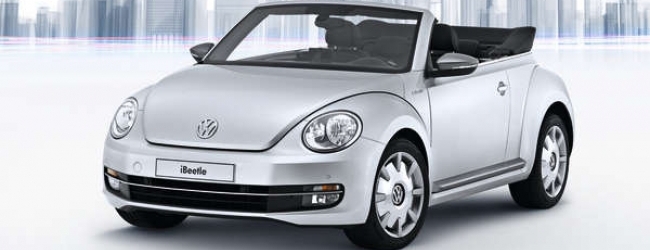
Volskwagen & Apple work together for incorporating an iPhone to the Beetle


The emblematic Volkswagen Beetle now integrates all functions of the Apple iPhone. This application will be installed as standard on coupe and convertible versions from 2014.


Time after the death of Steve Jobs, a company executive confirmed that Apple´s genius had among his projects, the creation of a smart car that could be called iCar, an idea that Jobs could not even sketch.
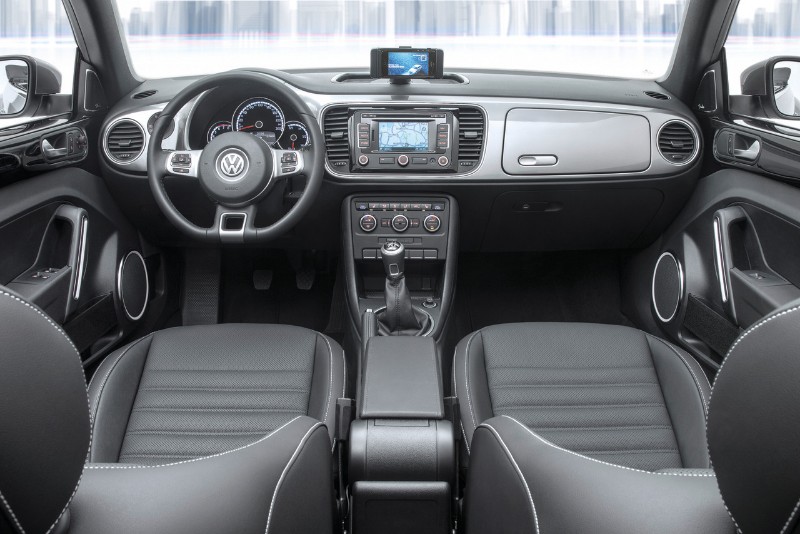
Approaching the realization of this vision, Apple in association with Volkswagen Beetle model, reflected in a car with new support for the iPhone, which also integrated the functions of the device in the vehicle by applying Volkswagen 'The Beetle Car Net'. This way, your smartphone is connected to iBeetle functions through the implementation and its docking station, making it the first VW Group model to use the iPhone as an integral component. 

Beetle-iPhone interface will be offered as an accessory or two future series for coupe and convertible Beetle. Both the device and its connector 'docking station' are located in the center of the dashboard and according to the German designers,all iPhone functions are accessible from a single call or voice commands to navigate and listen to music, among others.

Applying The Beetle Volkswagen Car Net can be used with the phone attached to the base or not, and the main menu will offer features such as Spotify, Coach, Reader, Photos, or Post, among others, so that passengers also are part of experience listening playlists, accessing Facebook or Twitter messages, taking pictures or send the location to your contacts.

FACT:
The iBeetle will be the first vehicle with a device integration for iPhone to be presented in early 2014 and will be available in coupe and convertible versions.

From:

Thursday, April 25, 2013

STOP DREAMING, THE SPORT SUV YOU WANTED IS HERE


The redesigned 2013 Ford Escape impresses test drivers with its engaging performance and overall refinement. Some even say it’s the best compact crossover on the market because it does so many things well.
According to test drivers, the difference between the all-new 2013 Ford Escape and the previous generation is pretty dramatic. Gone is the boxy Escape, and in its place is a curvy crossover that many critics say is a top choice in the class for being practical, high-tech and fun to drive. Inside, the 2013 Escape has good cargo space, though it doesn’t have as much as family-focused rivals like the Honda CR-V and Toyota RAV4. Test drivers also say the cabin has a quality look and feel, and report that there’s comfortable seating for all but the tallest passengers.

The Ford Escape is the 2013 Best Compact SUV for the Money because it has the best combination of ownership costs and positive reviews in its class.
The 2013 Escape earns a strong safety score, and comes with a class-competitive list of technology and safety features. It can be equipped with interior tech like Ford Sync and Sync with MyFord Touch, as well as a class-exclusive, motion-activated liftgate. While these features make the Escape one of the most high-tech models in the class, more than one reviewer notes that they can be hard to use. The Escape’s standard safety features now bring it up to par with its classmates, and it also offers optional features like rear parking assist and blind spot monitoring with cross-traffic alert.  
After taking the 2013 Escape on the road, reviewers say it handles a lot like a small car, but that shoppers should skip the base engine and head straight for the optional Ecoboost engines, which are both powerful and fuel-efficient.
Overall, the automotive press likes the 2013 Ford Escape a lot because it’s so well-rounded. It has car-like handling, a quality interior, refined Ecoboost engines and high-tech offerings.